First Apartment Kitchen Essentials Checklist and Starter Cookware

A first apartment kitchen needs fewer things than most lists suggest: a starter cookware set with a skillet, a saucepan and a larger pot, one or two baking pans, a sharp chef's knife, a cutting board, a handful of utensils and some food storage. Start with that core, cook for a few weeks, and only then fill the gaps you actually notice. The checklist below shows what to buy first, what can wait, and how to choose a starter cookware set that fits a small space.
What do you really need in a first apartment kitchen?
Think in terms of the meals you will cook most in month one: eggs, pasta, rice, a stir-fry, a sheet-pan dinner, maybe soup. Almost everything on this checklist earns its spot because it handles several of those meals. If an item only does one job, it goes on the "later" list.
The first-week checklist
- Cookware: a 10 to 12 inch skillet, a 2 to 3 quart saucepan with a lid, and a larger pot or Dutch oven for pasta, soup and chili.
- Bakeware: one rimmed sheet pan and one 9 x 13 or square baking pan.
- Knives and prep: a chef's knife, a paring knife and a cutting board that sits flat without wobbling.
- Utensils: a spatula or turner, a wooden spoon, tongs, a ladle, a whisk and a can opener.
- Measuring: one set of measuring cups and one set of measuring spoons.
- Mixing and draining: a large mixing bowl and a colander.
- Storage: a few lidded containers for leftovers and lunches.
- Safety basics: an instant-read thermometer, two oven mitts or thick pot holders, and a small fire extinguisher rated for kitchen use.
How to choose a starter cookware set
Buying a set is usually cheaper than buying the same pieces one at a time, and every lid and handle matches. The catch is that piece counts can be misleading. A "14-piece" set often counts each lid as a piece and may include utensils, so look at what the actual pots and pans are before you compare numbers.
What to look for
- The right core pieces. You want at least one skillet, one saucepan and one larger pot. Anything beyond that is a bonus.
- Your stovetop type. Many apartments have electric coil, smooth glass or induction cooktops. Check the set's listed stovetops before you buy, especially for induction.
- Lids you can see through. Tempered glass lids let you check simmering rice or sauce without lifting the lid.
- Oven limits. Know the maximum oven temperature for both pans and lids so you can finish a dish in the oven without guessing.
- Storage footprint. In a small kitchen, how the set stacks matters as much as how it cooks.
Nonstick is a forgiving choice for new cooks, since eggs, pancakes and fish release easily and cleanup is quick. Stainless steel and cast iron last a very long time but have more of a learning curve. Plenty of people start with a nonstick set and add a cast iron skillet later.
If cabinet space is tight, a set with removable handles is worth a look. The 14-Piece Detachable Cookware Set in White Cream is reinforced die-cast aluminum with a ceramic-granite nonstick coating, detachable cool-touch handles and tempered glass lids with silicone rims. It works on gas, electric, ceramic and induction stovetops. Its coating heat limit is 400°F, so keep oven use below that.
Shop the cookware sets to compare piece counts side by side.
Do you need bakeware right away?
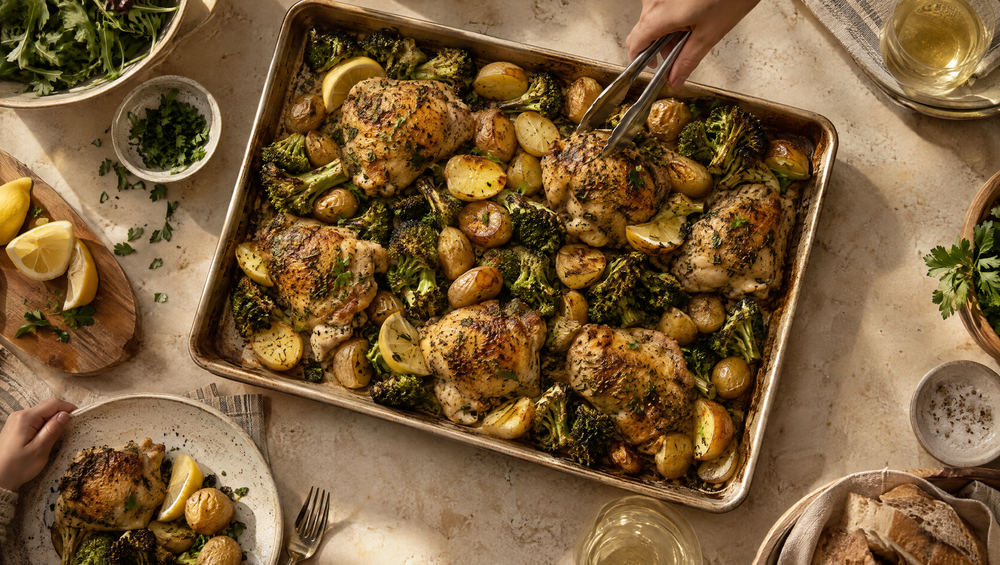
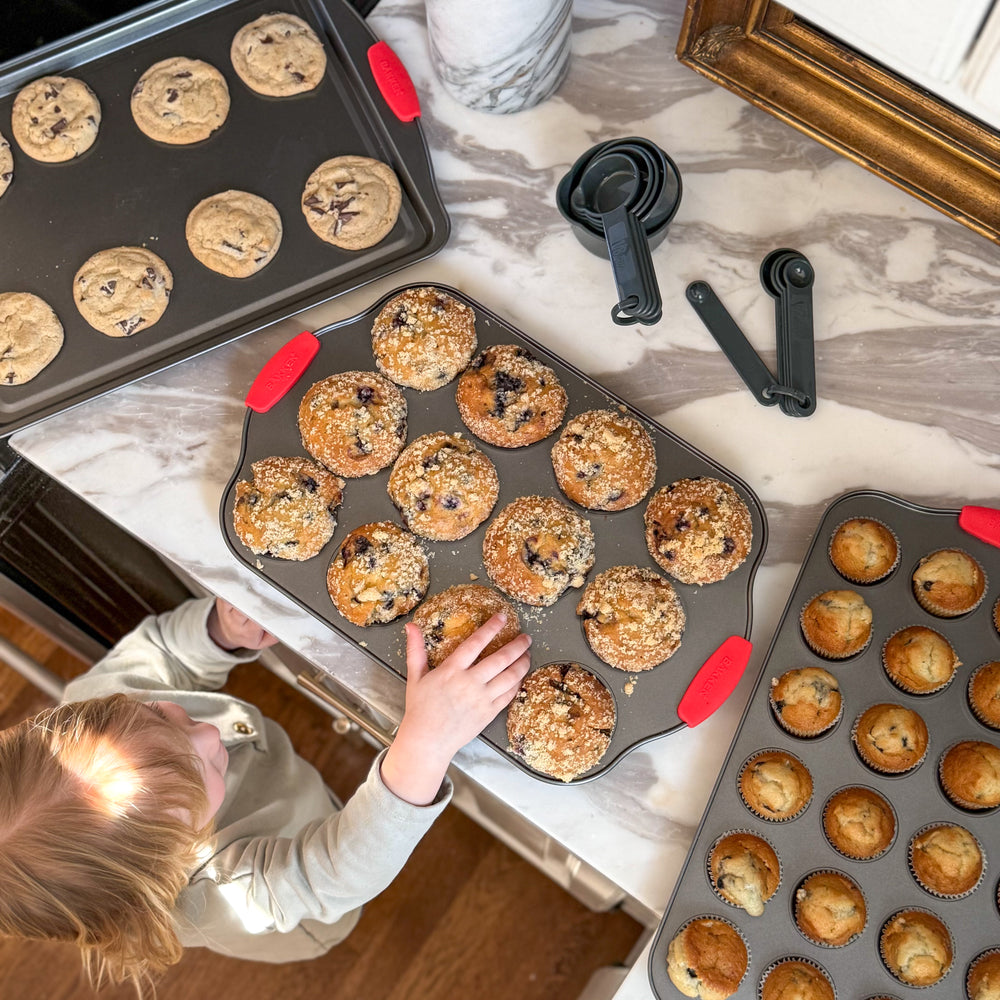
You need less than you think. A single rimmed sheet pan covers roasted vegetables, chicken thighs, cookies, frozen fries and sheet-pan dinners. Add a 9 x 13 or square pan for casseroles, brownies and baked pasta. A loaf pan and a muffin pan are nice additions once you know you like to bake.
If you want both cookware and bakeware covered in one purchase, a combined set saves you from piecing it together. Browse the cookware and bakeware sets for options that include pots, pans and baking pieces, or the bakeware sets if your stovetop pieces are already handled.
Which utensils and tools come first?
Match utensils to your pans. Nonstick and ceramic coatings last longer with silicone, nylon or wood tools, so skip metal spatulas and whisks for those pans. Beyond that, a short list goes a long way:
| Tool | Why it earns a spot | Buy now or later? |
|---|---|---|
| Silicone or nylon turner | Eggs, pancakes, burgers, safe on nonstick | Now |
| Tongs | Flipping, tossing pasta, serving | Now |
| Wooden spoon | Stirring sauces, scraping up browned bits | Now |
| Measuring cups and spoons | Following recipes accurately, especially baking | Now |
| Instant-read thermometer | Knowing meat is cooked through | Now |
| Whisk | Eggs, dressings, batters | Now |
| Ladle | Soup and chili | Soon |
| Box grater | Cheese, carrots, zest | Soon |
| Vegetable peeler | Potatoes, carrots, apples | Soon |
| Rolling pin, pastry tools | Pie and dough projects | Later |
Measuring spoons are one of those small things people forget until a recipe calls for a teaspoon of baking soda. You can find them in our utensils collection.
Why a thermometer belongs on the list
An instant-read thermometer takes the guesswork out of cooking meat, which matters when you are learning. According to FoodSafety.gov, poultry and ground poultry should reach 165°F, ground beef and pork 160°F, and whole cuts of beef, pork, veal and lamb 145°F with a 3 minute rest. Leftovers should be reheated to 165°F. Keep your refrigerator at 40°F or below and your freezer at 0°F.
What can wait until later?
These are useful, but not on day one. Wait until a recipe or habit gives you a real reason to buy them.
- A large stock pot, unless you already cook big batches of soup or stock
- Specialty pans like a wok, griddle or grill pan
- A stand mixer or food processor
- A full knife block (a chef's knife and paring knife cover most tasks)
- Single-use gadgets such as avocado slicers or egg separators
Small-kitchen tips for your first place
- Keep what you use daily within reach. Your skillet, saucepan and main utensils should live closest to the stove.
- Nest and stack. Store smaller pots inside larger ones and place a soft liner or paper towel between nonstick surfaces to protect the coating.
- Store lids separately. Lids stood on edge in a bin or drawer take far less space than lids balanced on pots.
- Care for nonstick from the start. Moderate heat, gentle tools and hand washing help coatings last. Our guide to making your nonstick last covers the details.
A simple first-month cooking plan
Once your kitchen is stocked, put it to work with meals that use the core pieces:
- Skillet: scrambled eggs, quesadillas, a simple chicken and vegetable stir-fry.
- Saucepan: rice, oatmeal, a quick tomato sauce.
- Large pot: pasta night, a batch of chili you can portion for lunches.
- Sheet pan: roasted vegetables with sausage or chickpeas.
- Baking pan: baked ziti or a pan of brownies for new neighbors.
After a month, you will know exactly which piece you reach for most and which gap is slowing you down. That is the right time to add one more pan.
Quick answers
What is the minimum cookware for a first apartment?
A skillet, a saucepan with a lid and one larger pot cover most everyday cooking. Add a sheet pan and you can roast, bake and make sheet-pan dinners too.
Is a cookware set worth it for a first apartment?
Usually, yes. A set costs less than buying the same pieces separately and gives you matching lids, but check which pieces are actual pots and pans before comparing piece counts.
Should my first pans be nonstick?
Nonstick is easy for new cooks because food releases well and cleanup is fast. Use moderate heat and non-metal utensils to help the coating last.
What kitchen items do people forget when moving?
Measuring spoons, a can opener, a colander, oven mitts and a meat thermometer are the most common gaps. Add a few food storage containers so leftovers have somewhere to go.